

Local Authorities £12m damages claim against Consulting Engineers over social housing development dismissed
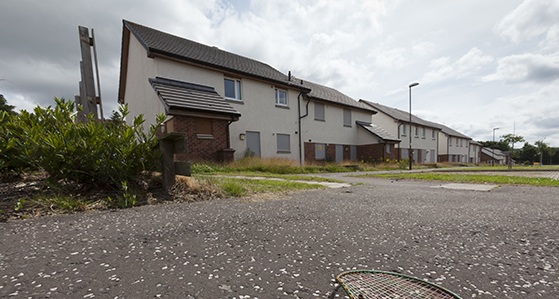
Midlothian Council raised an action against Blyth & Blyth Consulting Engineers Ltd (fourth defenders) (“Blyth & Blyth”) and others in respect of the loss of the development of 64 social homes at a site in Gorebridge, Midlothian, which were rendered “uninhabitable” as a result of the ingress of carbon dioxide from disused mine workings.
The case follows from a previous action raised by Midlothian Council against Bracewell Stirling Architects (first defenders) and others. In the previous action, the local authority raised an action in damages claiming that the first defenders who were appointed as lead consultant had “assumed responsibility” for the ‘other contractors’ negligence, the court of appeal dismissed the claim.
The social housing development in Gorebridge was built between December 2007 and June 2009. Due to ingress of ground gas, including carbon dioxide, that had migrated to the surface from disused coal mine workings, the development was subsequently demolished. The demolition works being undertaken between May 2015 and June 2016.
The current action against Blyth & Blyth was centred around the question of short negative prescription in terms of section 6 of the Prescription and Limitation (Scotland) Act 1973 and in particular the question of when Midlothian Council suffered the loss.
Under the current legislation, the Prescription and Limitation (Scotland) Act 1973, an obligation regarding contract and breach of contract claims extinguishes after five years (with a 20-year prescriptive period long-stop). The five-year period commences when loss arises and when the breach of contract has occurred, this could be from the date that the pursuer becomes aware or could have become aware with reasonable diligence of having sustained a loss.
Blyth & Blyth successfully argued that the breach of contract had occurred not when Midlothian Council became aware of an issue with the development (7 September 2013) but sometime between December 2007 and June 2009 during the construction period. Is was in this timeframe that Midlothian Council incurred £6 million in costs associated with the construction of the development. It was argued that this was wasted expenditure and was thus enough to be recognised to be awareness of the occurrence of a loss.
The court agreed with Blyth & Blyth and dismissed the action.
Lord Doherty said: “In my opinion the pursuer suffered loss, injury or damage before practical completion. As soon as the pursuer accepted the fourth defender’s advice and acted upon it there was damnum. The pursuer (and the construction professionals and contractors it engaged) relied upon the advice in determining the development’s design and in carrying out its construction.
“In my opinion, for the foregoing reasons, it follows that the pursuer was aware of having suffered loss, injury or damage more than five years before the action was raised on 4 September 2018; and that, accordingly, the obligation of the fourth defender to make reparation has been extinguished by the short negative prescription. That is sufficient to decide the case.
To view the full judgment please click here.
This briefing note does not constitute legal advice: individuals should seek professional advice, specific to their own circumstances, in relation to any matters raised.